
James Joyce
13 June 2026
The Royal Canal Odyssey 100k Journey
Our journey begins, as Ulysses does, at the Martello tower in Sandycove, which now houses the wonderful Joyce Tower Museum. The tower is just a short walk from Sandycove Village where the annual Bloomsday celebrations will be in full swing on Bloomsday.
Our route takes us along the coast road at Newtownsmith Green and on towards Blackrock, passing Dun Laoghaire Harbour and another Martello tower at Seapoint.

We pass through Blackrock, where the Joyce family lived for a period in the early 1890s, residing in Leoville, a house at the bottom of Carysfort Avenue, before they relocated to the Northside. Although James Joyce only lived in Blackrock for a short time, the area features extensively in A Portrait of the Artist as a Young Man and it is there that Stephen Dedalus goes running in the park. We do the same as our route leads us onwards through Blackrock Park to Booterstown. We continue on the Merrion Road, through the Merrion Gates and on to Sandymount Strand, which is the setting for the Proteus and Nausicaa chapters of Ulysses.
Unlike Dedalus and Bloom, we’ll stay off the sand – with more than 90 km still to run, we can’t afford to get it in our shoes!
We turn off Beach Road at Leahy’s Terrace and run on to Newbridge Avenue where Bloom visits Paddy Dignam’s widow at No. 9. Our route then follows the Dodder River for a short distance along River Walk. The point where the Swan River empties into the Dodder is marked by a plaque bearing an inscription from Joyce’s Finnegans Wake.
We cross the Dodder River at London Bridge and make our way along Bath Avenue, Grand Canal Street Upper and Hogan Place, before turning into Meade’s Terrace to pass through the arch beneath Holles Street Hospital, which is the setting for the Oxen of the Sun episode in Ulysses. Continuing straight along Denzille Lane and Fenian Street, we come to Sweny’s Chemist, where Leopold Bloom buys his lemon soap. The shop now operates as a book store and Joycean cultural centre, but lemon soap can still be purchased there.
On Westland Row, we pass St Andrew’s Church (All Hallows), which Bloom visits in the Lotus Eaters episode of Ulysses. Next door to the church is the former site of the post office (now the entrance to Pearse Station) where he collects a saucy letter from Martha Clifford. Continuing along Lombard Street, we pass Nichols Funeral Directors on the left before arriving at the River Liffey.
We cross the Liffey at the Samuel Beckett Bridge. Beckett, a literary giant in his own right, figured prominently in Joyce’s life – he served as Joyce’s secretary for a period and entered into a relationship with James’s daughter Lucia, although it was short-lived. Nevertheless, Beckett remained friendly with Joyce and later reminisced about time they spent together in Paris.
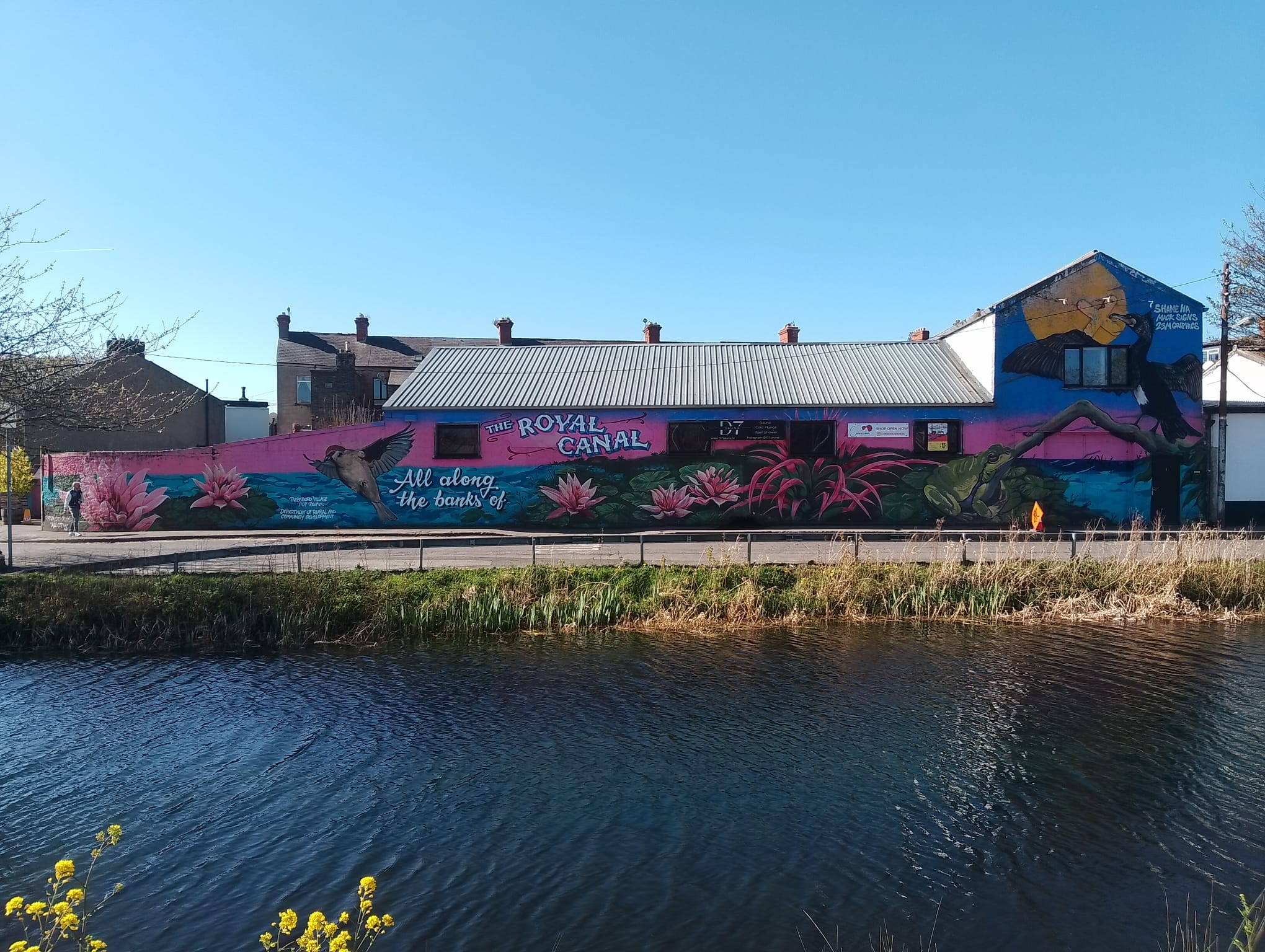
We arrive on the north side of the Liffey at Spencer Dock, where our Royal Canal journey begins. Extensive work has been carried out on this early section of the greenway in recent years and the effect has been transformative. With a high quality pathway now in place all the way from the beginning of the canal, it has become a popular route for cyclists and pedestrians. We follow the path as far as Clarke’s Bridge in Ballybough where we take a brief detour to visit Shane Sutton’s magnificent James Joyce mural at North Richmond Street, also the location of the O’Connell School, which counts the author among its many famous past pupils.
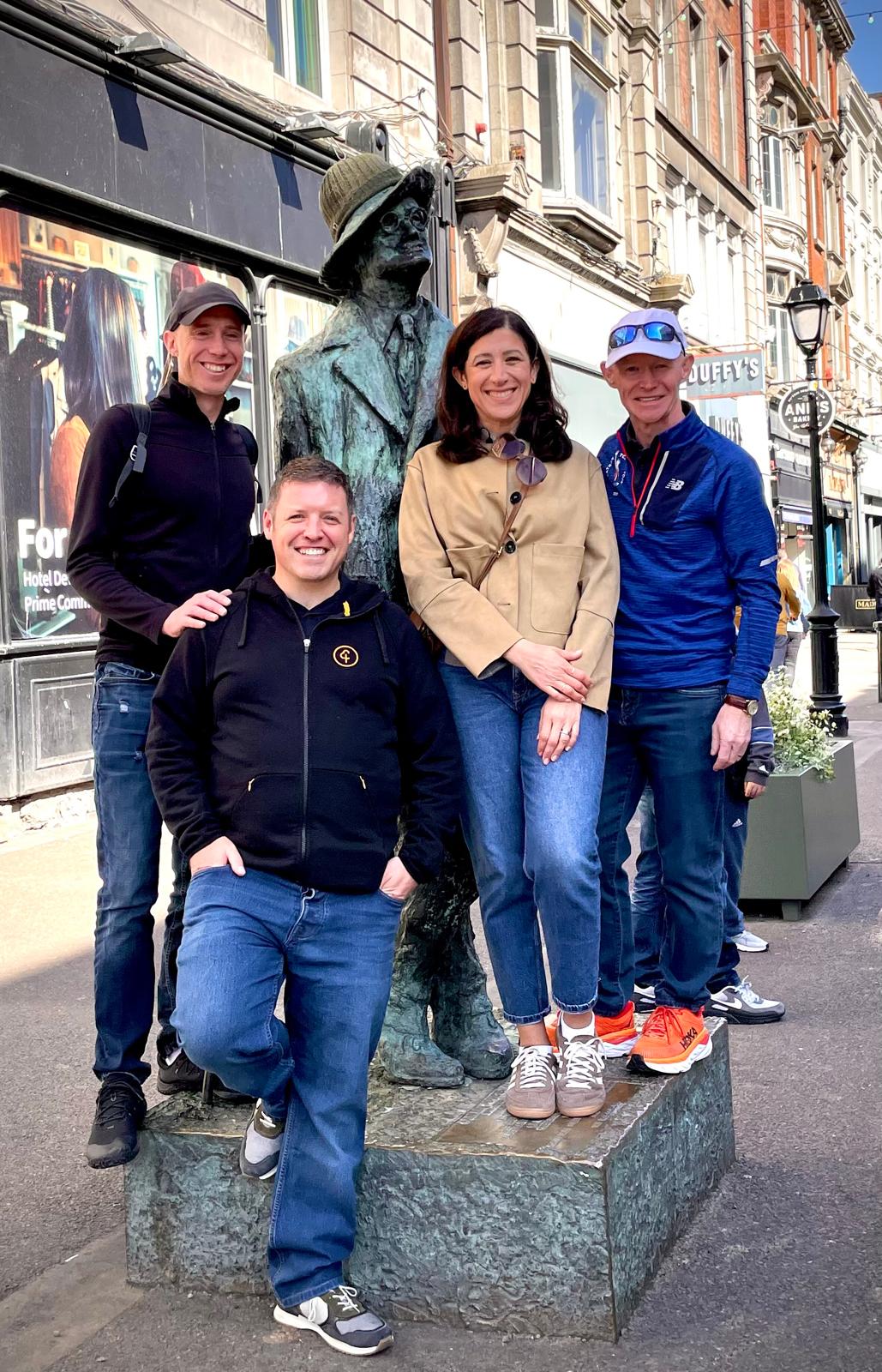
Returning to Clarke’s Bridge, we continue west along the canal, passing under the side of Croke Park stadium. Just across the canal at Binn’s Bridge, the statue of another towering literary figure, Brendan Behan, sits on a bench. Mountjoy Prison is so nearby that if the statue’s ears could hear, then the jingle jangle of the Auld Triangle would probably be audible.
Just a little further on, we meet Cross Guns Bridge, which Bloom and Dedalus pass over in the Hades chapter, during their carriage ride to Paddy Dignam’s funeral in Glasnevin Cemetery. As we continue west along the canal, we pass close to Glasnevin Cemetery ourselves and will catch sight of its famous round tower, which stands over the tomb of Daniel O’Connell.
Another mile or so along the canal, we reach Broom Bridge. It was here on 16 Oct 1843 that William Rowan Hamilton, in a flash of inspiration, devised the rules of multiplication for quaternions and hastily scratched them into the stone of the bridge, an event some commemorate by referring to the 16 October as “Broomsday”.
The canal path leads on through the suburbs of Pelletstown, Ashtown, Castleknock and Coolmine. The section of the canal around Clonsilla is known as the “Deep Sinking”, due to the fact that it cuts a deep, narrow channel through limestone rock. This was the site of the 1845 Royal Canal Disaster, in which a night boat to Longford sank with the loss of 15 passengers.
The path is a bit wilder in this section, and there’s a steep drop to the canal, so we’ll mind our footing here!
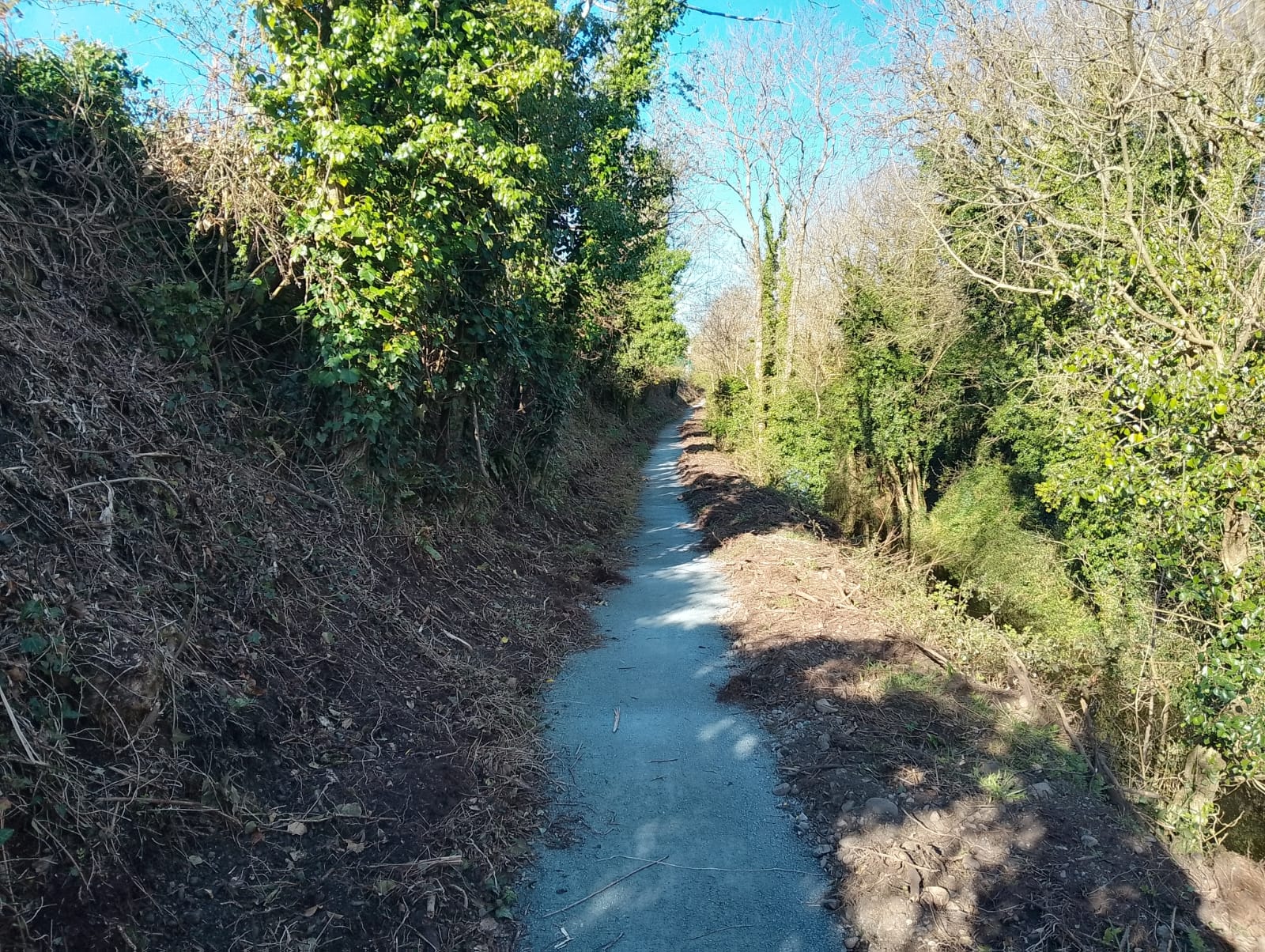
Beyond the Deep Sinking, the surroundings become quieter with longer gaps between built-up areas. We pass through the towns of Leixlip, Maynooth, Kilkock and Enfield, but after that the most significant landmarks are the historic pubs we’ll encounter: Furey’s in Moyvalley, The Hill in Hill of Down, Nanny Quinn’s, Cunningham’s “The Hideout” and Mary Lynch’s.
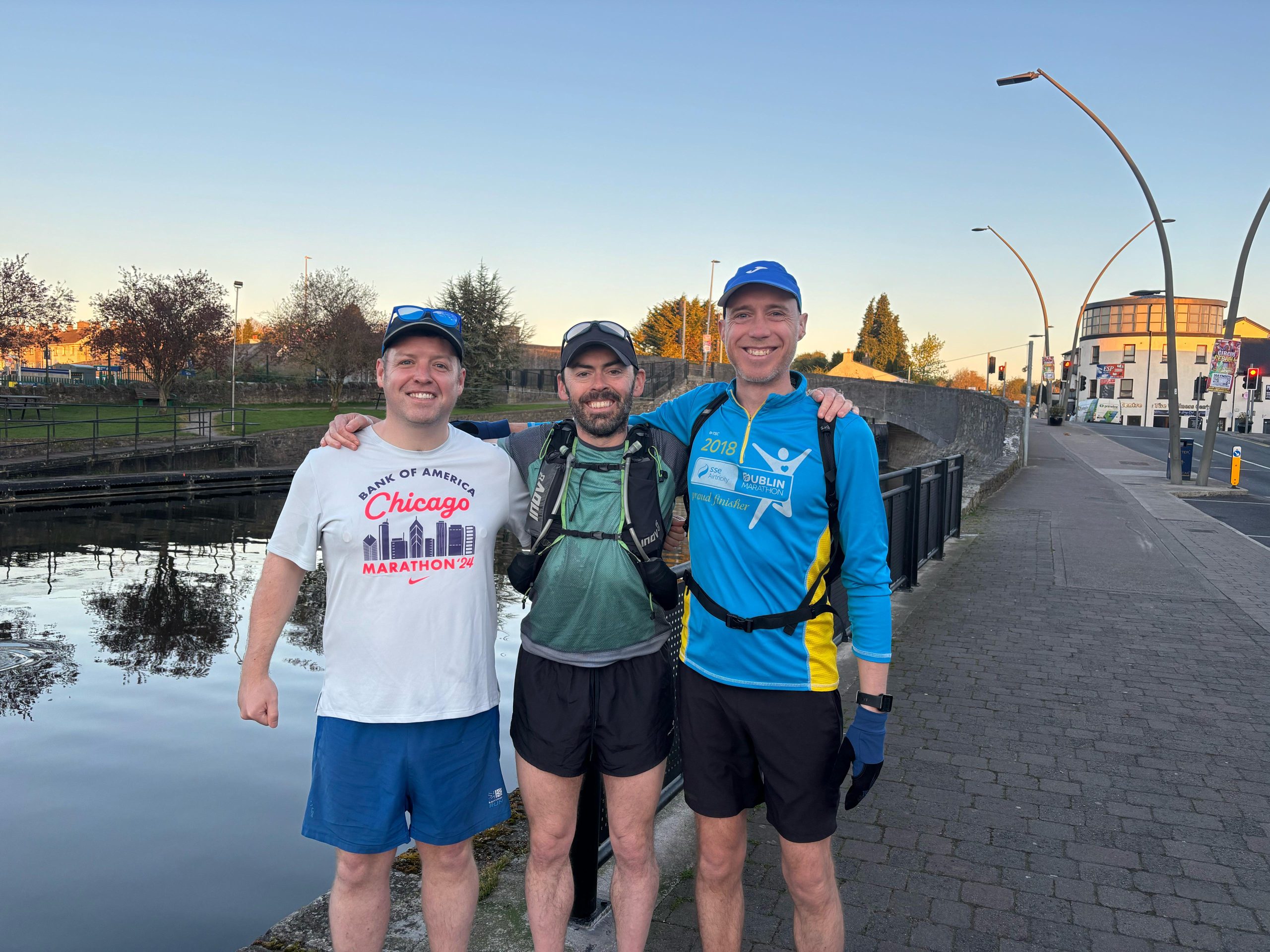
Finally, we arrive at Mullingar, turning off the canal path onto Austin Friar St, where we pass Fagan’s Office Supplies, which appears in Ulysses as Shaw’s photographic business where Milly Bloom (daughter of Leopold) is employed. James Joyce probably stayed in the same building when visiting Mullingar with his father in the summers of 1900 and 1901.
Our run ends when we touch Joe Dolan’s statue on Pearse Street, after which we intend to rest our legs in the Greville Arms Hotel, which Milly mentions in her letter to Leopold in the Calypso chapter. The hotel’s Ulysses bar also houses a life-sized waxwork of James Joyce.

Get Involved